
India vs Japan: Historic T20I Ends in a Thrilling Two-Run Finish
India defeated Japan by two runs in a historic T20 International, as the two teams met for the first time in men's international cricket.
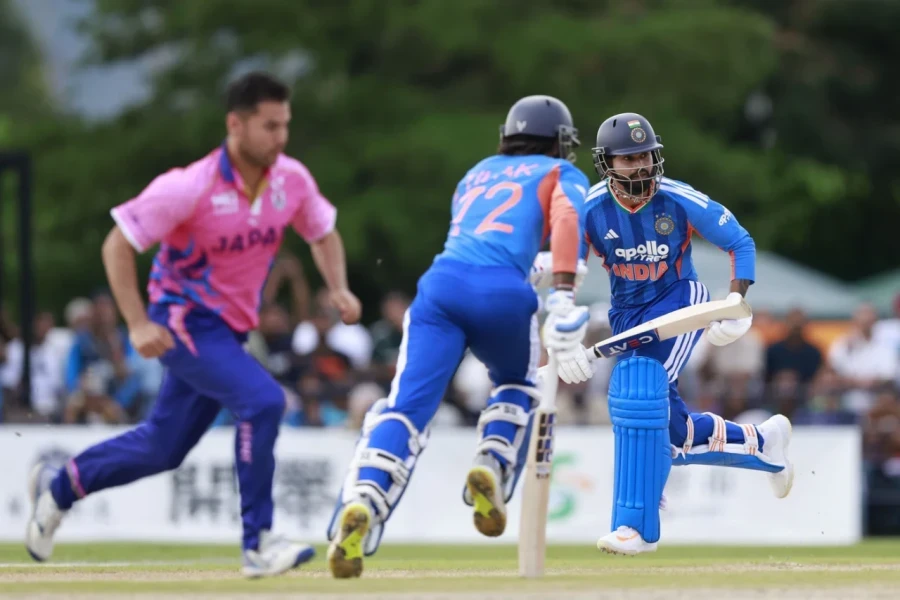
India vs Japan Match: Quick Summary
- Match: India vs Japan
- Format: T20 International
- Venue: Sano International Cricket Ground, Japan
- Result: India won by 2 runs
- India's Target: 33 runs
- Match Format: 5 overs per side due to rain
A Historic First Meeting
India and Japan created a memorable moment in international cricket when the two teams faced each other in a historic T20 International. The encounter brought together one of cricket's biggest teams and Japan's developing cricket side.
The match was played at the Sano International Cricket Ground in Tochigi, Japan, and attracted considerable attention because it was the first men's international cricket meeting between India and Japan.
Rain Changes the Match
Rain played a major role in the contest and forced the match to be reduced to just five overs per side. The shortened format meant that both teams had very little time to settle and every delivery became extremely important.
India were unable to build a huge total in the five-over innings and eventually set Japan a target of 33 runs.
Japan Push India to the Limit
Japan approached the chase positively and kept the pressure on India. Despite the difficult conditions and limited number of deliveries, the hosts remained in contention until the final over.
India needed a disciplined final over to close out the match. Axar Patel was handed the responsibility with Japan requiring only a few runs to dramatically change the result.
India's bowling attack held its nerve during the final deliveries. Japan could not score the boundary required to complete the chase, allowing India to escape with a narrow two-run victory.
A Significant Moment for Japanese Cricket
Although Japan finished on the losing side, the match represented an important milestone for cricket in the country. Facing India gave Japanese players valuable experience against an internationally recognised cricket team.
Cricket continues to develop in Japan, where baseball has traditionally dominated the sporting landscape. A high-profile international fixture involving India provides another opportunity to introduce cricket to Japanese sports fans.
India's Preparation in Japan
The fixture also provided India with an opportunity to experience Japanese conditions and prepare for upcoming international competitions. The shortened five-over format presented a very different challenge from a normal T20 match.
India's players had to adapt quickly, particularly with both batting and bowling opportunities severely limited by the weather.
More Than Just a Cricket Match
The India-Japan encounter was significant beyond the final score. It represented another step in the development of cricket in Japan while also providing an opportunity for sporting ties between the two countries to grow.
For India, the match provided useful preparation in Japanese conditions. For Japan, playing against India offered valuable international exposure and an opportunity to showcase the country's growing cricket programme.
The two-run margin also ensured that the historic occasion produced an exciting finish, with the result remaining uncertain until the final deliveries.
Key Takeaways
- India and Japan met in a historic men's T20I.
- Rain reduced the match to five overs per side.
- India set Japan a target of 33 runs.
- Japan pushed India close during the chase.
- India eventually won the match by two runs.
- The match was an important occasion for Japanese cricket.
India vs Japan Cricket Match: FAQs
When did India play Japan in cricket?
India and Japan faced each other in a men's T20 International in September 2026.
Who won India vs Japan?
India won the match by two runs.
How many overs were played?
Due to rain, the match was reduced to five overs per side.
What target did India set Japan?
India set Japan a target of 33 runs.
Why was the India vs Japan match significant?
The match was significant because it marked a historic meeting between the two men's international cricket teams and provided Japanese players with the opportunity to compete against India.